Stopping Ozempic or Wegovy Because It's Too Expensive: How to Do It as Safely as Possible
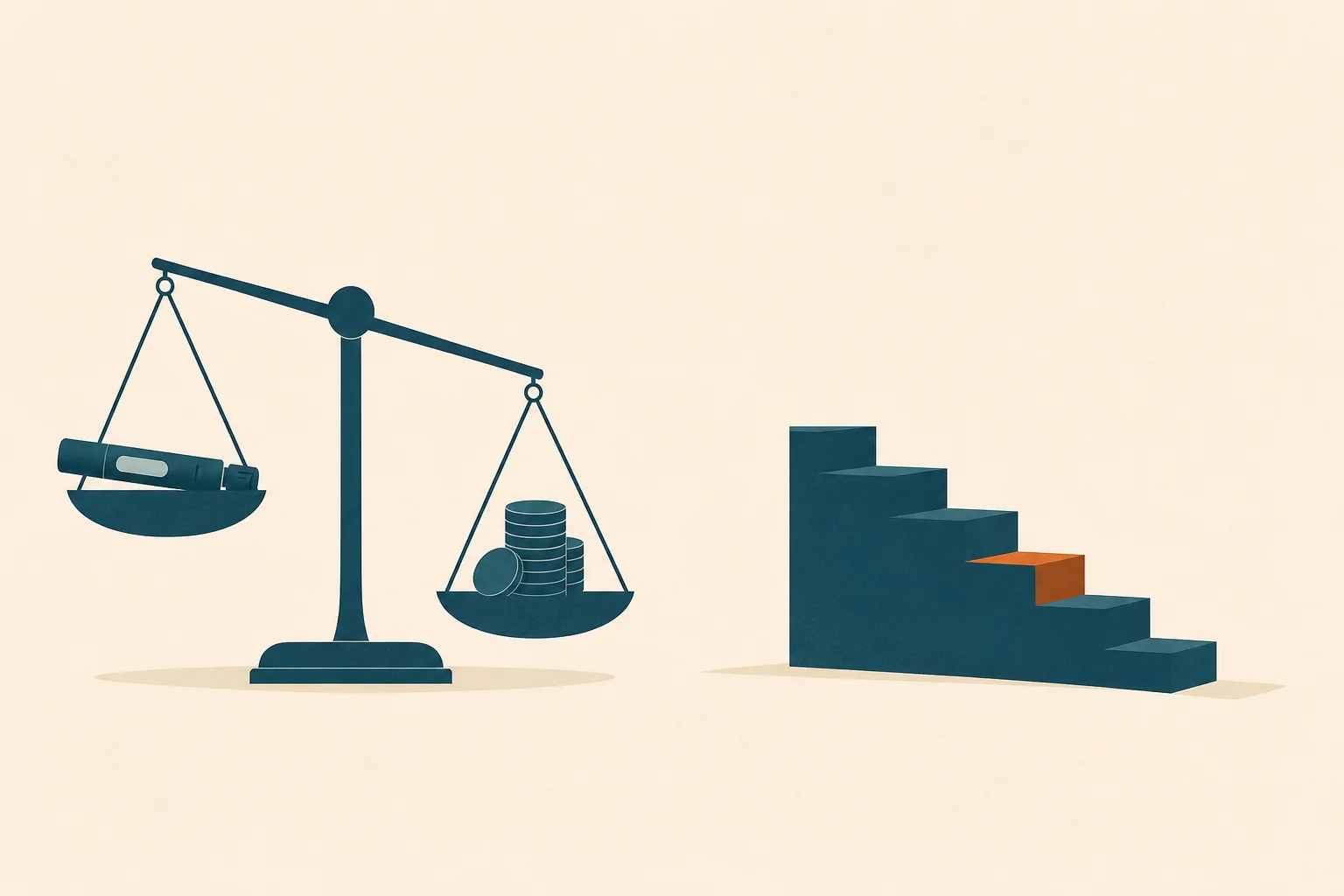
If the monthly cost has reached the point where you cannot keep paying for your GLP-1, you are in the most common situation there is for stopping one. Cost is the leading reason people come off these drugs, and being forced off by price is not the same as deciding you are done. It is involuntary, it is frustrating, and it is not a failure of willpower. This page is here to help you handle it well.
A first, important reframe: coming off a GLP-1 is not an acute medical emergency the way stopping some drugs can be. There is no dangerous withdrawal syndrome. What changes is that appetite returns as the medication clears, and weight tends to drift back — which is exactly why doing this deliberately, rather than by running out of vials, is worth the effort. (One exception: if you take a GLP-1 for type 2 diabetes, stopping affects your blood-sugar control and is a conversation to have with your prescriber before you stop, not after.)
We are an independent publication, not a prescriber or pharmacy. Nothing here is medical advice. Any change to your dose or to whether you stay on therapy is a decision for you and a licensed clinician.
First: are you sure you have to stop?
Many people conclude they are out of options when they are one phone call away from a cheaper route they did not know existed. Before you accept being forced off, work through these:
- Appeal a prior-authorization denial. If insurance refused to cover your GLP-1, denials are frequently overturned on appeal, especially with a documented comorbidity. Our GLP-1 prior-authorization appeal guide walks through how.
- Use the manufacturer savings cards. Commercially insured patients can sometimes pay far less with a copay card. See the GLP-1 savings card guide.
- Re-check cash-pay — it has come down. Manufacturer pharmacies narrowed the gap that drove people to compounding: Wegovy through NovoCare runs $349/month(as of May 2026) a month and Zepbound vials through LillyDirect start at $299/month. That may still be a stretch, but it is often less than people assume.
- Consider a cheaper or oral alternative. An older GLP-1 or an oral option may cost less than what you are on. We lay out the lower-cost routes in cheaper GLP-1 alternatives.
If your access ended because a compounded supply was discontinued rather than because of insurance, our guide to your choices when a compounded GLP-1 is discontinued lays every path side by side. The point of this section is simple: rule out the affordable routes before you treat stopping as inevitable.
The “make it last” conversation — with your prescriber
If full-price, full-dose therapy is genuinely out of reach, there is a question worth raising with your prescriber: could a lower maintenance dose or a longer interval between doses keep you on treatment at a price you can manage? Some people hold much of their progress on less drug than they used to reach it, and our GLP-1 maintenance dose and GLP-1 drug holidays explainers cover what that can look like.
The non-negotiable caveat: this is a clinical decision, not a do-it-yourself one. Skipping, splitting, or stretching doses on your own to save money can mean losing appetite or blood-sugar control without the savings being worth it — and with a self-drawn dose it is easy to get the amount wrong. Ask the question directly and let a clinician answer it for your situation.
If you genuinely have to stop: do it on purpose
If there is no affordable way to continue, the single most useful thing you can do is stop deliberately instead of simply running out. Coming off by attrition — using your last vial and then nothing — gives you no plan for the appetite that returns. A planned wind-down does.
- Talk to your prescriber about a taper. Where appropriate, a gradual step-down is gentler than a hard stop, and some people continue to do well through a slow taper. Whether and how to taper is a clinical call; our tapering off GLP-1 drugs guide covers what published protocols and obesity-medicine practice actually do.
- Know what the stop itself feels like. Appetite, food thoughts, and earlier hunger return over the weeks after your last dose. The drug-specific picture is in stopping Wegovy: what happens and stopping Zepbound: what happens.
- Time it around your supply, not against it. If you have a few doses left, that is the window to plan the taper and shore up your habits — not a buffer to ignore until it is gone.
What to honestly expect
It helps to go in with realistic numbers rather than fear. After stopping, the appetite-suppressing effect fades and the body defends its prior weight: ghrelin rises, fullness comes later, and food regains its pull. On average, people regain a majority of the weight they lost within roughly a year — but, importantly, they still keep off about a quarter of the original loss, and many hold considerably more (University of Cambridge analysis; see also Scientific American).
Two things matter about those numbers. First, regain is physiology, not a moral verdict — it is the hormonal state the drug was holding back returning to baseline. Second, the average hides a wide range: a meaningful share of people keep much more off, and the difference is shaped by what you do next. Our weight regain after GLP-1s page has the full trial detail if you want it.
Holding on to what you can
You cannot replicate a GLP-1 with willpower, but the habits you built while appetite was quiet are real assets, and a few things genuinely help blunt regain:
- Protect protein. Adequate protein supports the lean mass that keeps your metabolic rate up; see GLP-1 protein requirements.
- Lift, don’t just cut. Resistance training defends muscle against the regain process and is one of the better-supported maintenance levers.
- Keep the structure. The smaller portions, the higher-fibre, higher-protein meals, the routine — these can persist after the drug and are worth holding onto deliberately rather than letting them slide with returning appetite.
- Watch the trend, not the day. Weighing the weekly trend rather than reacting to daily noise helps you catch drift early, while it is still small.
None of this stops regain entirely, and it is not meant to. The goal is to keep as much of your progress as the situation allows, without pretending the drug was optional.
The temptation to avoid
When cost is the thing forcing you off, the cheap peptides advertised online — “research-grade,” “not for human consumption” — can look like a lifeline. They are not. They are a fundamentally different and more dangerous risk category than a pharmacy-made medicine, with no verified identity, purity, or sterility, and no one accountable if they harm you. We explain exactly why in is research-grade semaglutide safe?. If money is the problem, the legitimate routes at the top of this page are a far safer place to spend your effort.
A last word
Being priced out of a treatment that was working is genuinely hard, and the regain that can follow is not evidence that you failed or that the drug was a crutch. Obesity is a chronic condition, and stopping for cost is rarely permanent — insurance changes, prices move, new options arrive. Manage this stretch as well as you can, keep a record of your dose and tolerance so restarting later is easy, and treat this as a pause you are handling, not a verdict.
This article is educational and informational only. It is not medical advice. Decisions about stopping, tapering, changing your dose, or staying on therapy — especially if you take a GLP-1 for diabetes — belong to you and a licensed healthcare professional. If you are in crisis or experiencing a medical emergency, contact your local emergency services.
Frequently asked questions
Is it dangerous to just stop my GLP-1 if I can no longer afford it?
Stopping a GLP-1 is not acutely dangerous the way stopping some medications can be — you will not go into withdrawal in a medical-emergency sense. The main effects are that appetite and food cues return as the drug clears over a few weeks, and weight and cardiometabolic markers tend to drift back toward where they started. If you have diabetes, stopping matters more, because your blood-sugar control can change and may need a different medication — so a diabetic patient should not simply stop without talking to a prescriber. For weight management specifically, the bigger issue is doing it deliberately rather than by running out, so you can plan for the appetite return.
Can I make my prescription last longer by taking less or spacing out doses?
This is a real conversation to have — but with your prescriber, not on your own. Some patients stay on therapy affordably at a lower maintenance dose or a longer interval, and whether that is appropriate depends on your history, your goals, and your diabetes status if relevant. What you should not do is improvise it by skipping, splitting, or stretching doses without guidance: self-directed under-dosing can mean losing control of appetite or blood sugar without the savings being worth it. Ask the question directly; let a clinician answer it.
How much weight will I regain if I stop?
On average, studies find people regain a majority of the weight they lost within about a year of stopping — but they still keep off roughly a quarter of the original loss, and a substantial share hold a meaningful amount more. The regain is not willpower failure: stopping lets the appetite hormones the drug was suppressing return to baseline. How much you keep off is influenced by protein intake, resistance training, and the eating habits you built while on the drug. Our [weight regain after GLP-1s](/after-glp1/weight-regain-after-glp1) page covers the trial data in detail.
I've been offered cheap "research-grade" semaglutide online — is that a reasonable way to stay on it?
No. When cost is the pressure, unregulated 'research-grade' or 'not for human consumption' peptides look like an answer, but they are a different and more serious risk category than a pharmacy-made product — independent testing has found contents far below the labelled purity, contamination, and sometimes the wrong peptide entirely. We explain why in [is research-grade semaglutide safe?](/regulatory/research-peptide-glp1-risks). If price is the problem, the legitimate cost routes above are a safer place to put your energy.
If I stop now, can I go back on it later?
Yes. Stopping because of cost is not a door that closes permanently. Obesity is increasingly treated as a chronic condition, and many people cycle off and back on as circumstances — insurance, finances, life events — change. If you do stop, keeping a record of your dose and tolerance history (the same documentation that helps any provider switch) makes restarting later smoother. The goal is to manage this stretch as well as you can, not to treat it as the end of treatment forever.