GLP-1 Drugs and Metformin: Can You Take Both, and Should You?
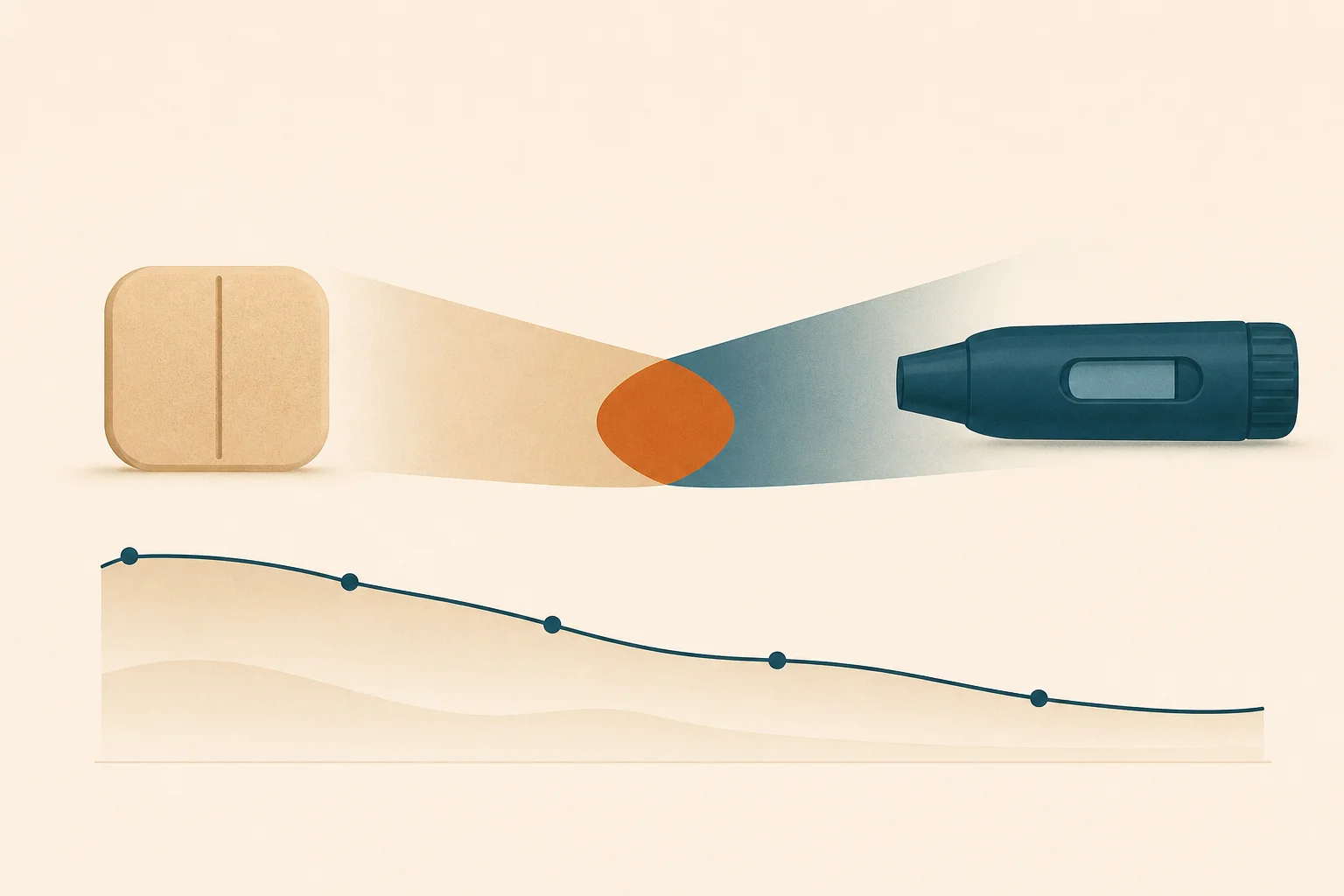
The clinical context: why this combination is common
Metformin (Glucophage) has been the first-line pharmacological treatment for type 2 diabetes since the 1990s. It is inexpensive ($4–10/month generic), well-tolerated in most patients, and has cardiovascular safety data from the UKPDS study. Pairing it with a GLP-1 is common and generally well-tolerated — see our fuller note on GLP-1 drug interactions.
GLP-1 receptor agonists are typically added to existing metformin therapy when metformin alone is insufficient to achieve HbA1c targets. Most T2D patients on GLP-1 drugs are already on metformin, making this combination extremely common. For an overview of how GLP-1 drugs work on glucose regulation, see our mechanism explainer.
For non-diabetic patients using GLP-1 drugs for obesity, metformin is sometimes used concurrently for insulin resistance management or as a low-cost adjunct — though this is less standard.
How the two drugs work together
Metformin mechanisms
- Reduces hepatic glucose production (primary mechanism — activates AMPK, reducing gluconeogenesis)
- Modestly improves insulin sensitivity in muscle
- May modestly reduce intestinal glucose absorption
- Does not stimulate insulin secretion (low hypoglycaemia risk when used alone)
GLP-1 receptor agonist mechanisms
- Enhances insulin secretion in response to glucose
- Suppresses glucagon secretion
- Slows gastric emptying
- Suppresses appetite and reduces caloric intake
- Cardioprotective effects (cardiovascular outcomes trials)
Why they complement each other
- Metformin targets hepatic glucose production; GLP-1 targets post-meal glucose spikes and appetite
- Metformin improves insulin sensitivity; GLP-1 enhances insulin secretion — different parts of the glucose regulation pathway
- Neither drug alone produces hypoglycaemia; the combination maintains this safety profile
Efficacy of the combination
In T2D patients on metformin who add a GLP-1 agonist:
HbA1c reduction
- Metformin alone typically achieves 1–2% HbA1c reduction
- Adding semaglutide (1 mg) to metformin achieves an additional 1.4–1.8% HbA1c reduction (SUSTAIN trials)
- Adding tirzepatide (15 mg) to metformin achieves an additional 2.3% reduction (SURPASS trials)
Weight loss
- Metformin produces modest weight loss (1–2 kg, or weight neutrality)
- Adding semaglutide produces an additional 12–15% weight loss at obesity doses
- Adding tirzepatide produces an additional 15–22% weight loss
The combination is clearly additive for both glucose control and weight management.
Is the combination safe?
No pharmacological contraindication exists to using GLP-1 drugs and metformin simultaneously. The drugs operate through independent mechanisms with no clinically significant interaction.
Specific considerations
GI side effects: Both metformin and GLP-1 drugs cause nausea, diarrhoea, and GI discomfort. Patients new to GLP-1 therapy who are already on metformin may experience combined GI effects in the early weeks. Starting GLP-1 at the lowest dose (0.25 mg semaglutide) is particularly important when metformin is co-prescribed.
Lactic acidosis risk with metformin: Metformin carries a theoretical lactic acidosis risk in certain clinical situations (significant renal impairment, contrast dye procedures, acute illness with dehydration). This risk is independent of GLP-1 therapy but is relevant to monitoring: GLP-1-induced vomiting or dehydration in a metformin patient warrants temporary metformin hold.
Hypoglycaemia: Neither drug alone nor in combination causes significant hypoglycaemia in patients without insulin or sulfonylurea co-prescribing. Adding GLP-1 to metformin does not increase hypoglycaemia risk.
When to consider stopping metformin after starting GLP-1
Many T2D patients on GLP-1 therapy eventually achieve excellent glycaemic control and weight loss. In this context, the question arises: should metformin be continued?
Arguments for continuing
- Complementary mechanisms provide better glucose control than either drug alone
- Metformin has independent cardiovascular data
- Metformin is inexpensive and generally well tolerated
- Some data suggests metformin may enhance GLP-1 drug efficacy through gut microbiome effects
Arguments for stopping
- GLP-1 alone is often sufficient for glycaemic targets
- Reducing pill burden improves adherence
- GI side effect combination can be problematic for some patients
- If HbA1c is in normal range, metformin may no longer be necessary
Clinical practice: Most diabetes guidelines recommend continuing metformin when adding GLP-1 therapy unless specific tolerability issues arise. Tapering metformin is reasonable if HbA1c normalises and GLP-1 therapy is producing sustained weight loss and metabolic improvement — discussed with the prescribing clinician.
For non-diabetic patients: is metformin worth adding to GLP-1?
Some obesity medicine specialists and bariatric physicians recommend adding low-dose metformin to GLP-1 therapy in non-T2D obese patients — particularly those with insulin resistance (elevated fasting insulin, elevated HOMA-IR, prediabetes). Check GLP-1 eligibility criteria to confirm qualifying BMI and comorbidity thresholds before starting.
The rationale: metformin improves insulin sensitivity independent of weight loss, and insulin resistance is a common feature of obesity that blunts GLP-1 response in some patients.
Evidence: No large RCT has specifically tested GLP-1 + metformin vs GLP-1 alone for obesity outcomes in non-T2D patients. The practice is based on mechanistic reasoning and small observational studies.
Practical consideration: Metformin is cheap ($4–10/month generic), has a well-established safety profile, and may add benefit for patients who are insulin-resistant. The main barrier is GI side effects — which are more pronounced in patients not already tolerating metformin.
Vitamin B12 interaction
Metformin is associated with vitamin B12 depletion over time — mechanisms include reduced intrinsic factor binding and altered calcium-dependent vitamin B12 absorption. For T2D patients selecting a GLP-1 drug, see our guide to the best GLP-1 drugs for diabetes. Long-term metformin users (5+ years) have significantly higher rates of B12 deficiency than non-users.
GLP-1 patients are already at elevated B12 deficiency risk from reduced food intake and potential meat aversions. Patients on both metformin and a GLP-1 drug should prioritise B12 monitoring (annually) and supplementation (at minimum a standard multivitamin with B12; sublingual B12 for patients with known absorption concerns).
Summary
GLP-1 drugs and metformin are safe and effective in combination — additive for both glucose control and weight loss with no pharmacological interaction. The main practical concern is combined GI side effects during GLP-1 initiation. Most T2D patients continue metformin after adding GLP-1 therapy unless tolerability requires discontinuation. Vitamin B12 monitoring is important for patients on this combination long-term. For non-T2D obese patients with insulin resistance, metformin may be a useful adjunct to GLP-1 therapy, though RCT evidence specific to this combination is limited.