CagriSema: Novo Nordisk's GLP-1 + Amylin Drug — NDA Status, Trial Data, and What It Changes
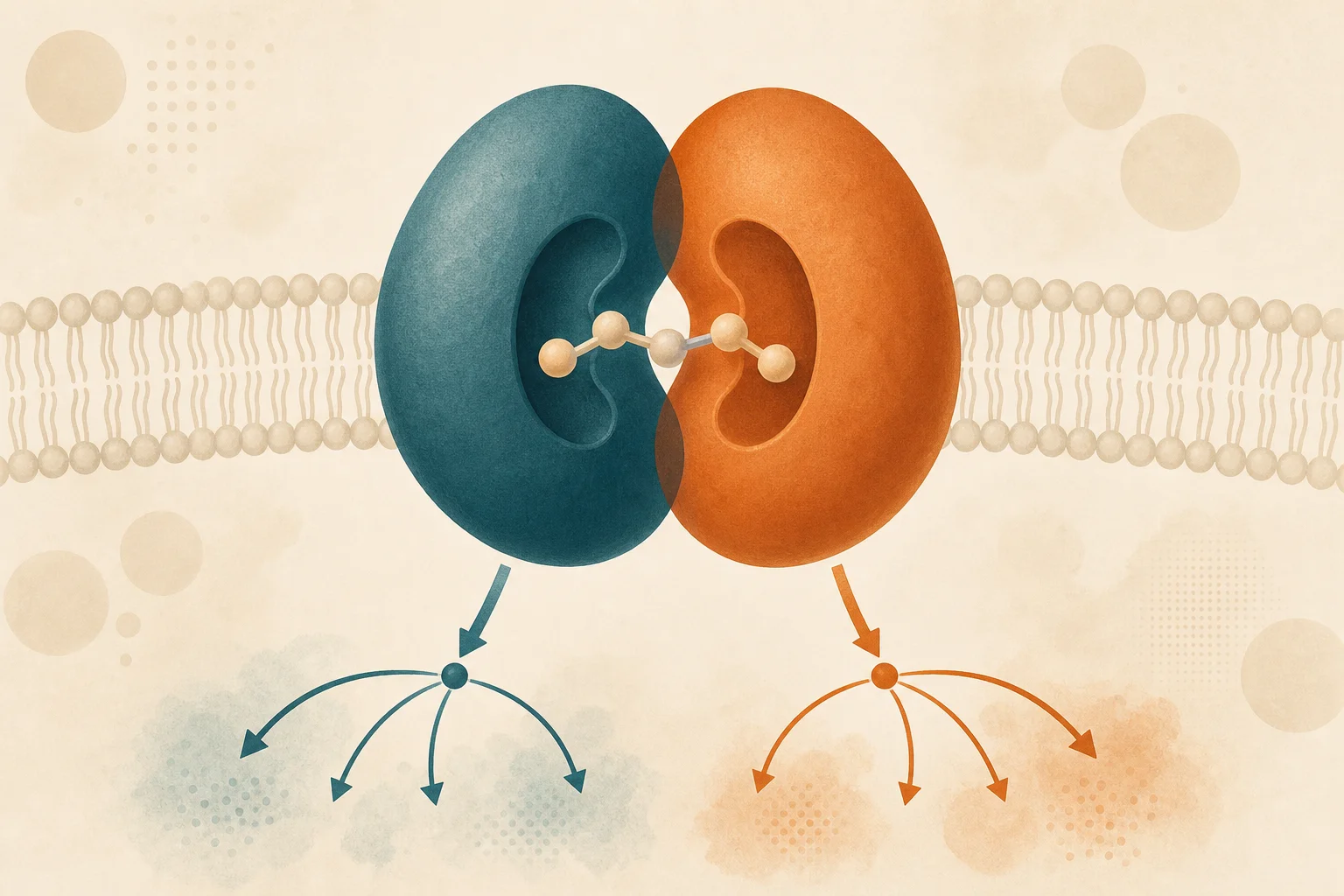
The weight-loss drug pipeline is more active than at any point in two decades. Orforglipron got FDA approval in April 2026. Retatrutide is in Phase 3. And Novo Nordisk has submitted an NDA for CagriSema — a drug that represents something genuinely new in the GLP-1 era: the first combination of a GLP-1 agonist and an amylin analog in a single weekly injection.
This page tracks CagriSema’s regulatory status, summarises the Phase 3 trial data, and explains what the amylin mechanism adds that semaglutide alone cannot provide.
Last updated: May 2026. This is a live-tracker page; we update it as FDA milestones occur.
What CagriSema is
CagriSema is a fixed-dose combination injection containing:
- Semaglutide 2.4 mg — the same dose and active ingredient as Wegovy
- Cagrilintide 2.4 mg — a long-acting analog of amylin, a hormone naturally co-secreted with insulin
The combination is given as a single once-weekly subcutaneous injection. It is not semaglutide plus a separate second injection — it is a co-formulated product designed for the same injection device and schedule as Wegovy.
Novo Nordisk submitted the NDA to the FDA on December 18, 2025, citing data from two pivotal Phase 3 trials in the REDEFINE programme. An FDA decision is expected in late 2026, with early 2027 as the realistic availability estimate if standard review timelines hold.
What cagrilintide is — and why amylin matters
To understand what CagriSema adds, you need to understand what amylin is and why it was largely overlooked until recently.
Amylin is a small peptide hormone co-secreted by the pancreatic beta cells alongside insulin after meals. It acts primarily in the brainstem — specifically the area postrema — and in the hypothalamus, via calcitonin and amylin receptors. Its main effects are:
- Slowing gastric emptying (overlapping with GLP-1, but through a different receptor pathway)
- Suppressing post-meal glucagon (reducing hepatic glucose output)
- Sending satiety signals directly to the brain via the brainstem, independent of the vagal signalling that GLP-1 uses
The problem with native amylin as a drug: it has a half-life of about 12 minutes and tends to form amyloid fibrils at physiological concentrations — the same protein aggregation seen in type 2 diabetes pancreatic tissue. Pramlintide (Symlin), an early amylin analog approved in 2005, had to be injected three times daily at meals, limiting its clinical use.
Cagrilintide solves both problems. Novo Nordisk engineered it with fatty acid acylation similar to how semaglutide was extended from GLP-1 — the modification binds albumin and dramatically extends the half-life to allow once-weekly dosing. Published research in eBioMedicine (Lancet) confirmed cagrilintide’s weight-lowering effects are mediated specifically through amylin receptors 1 and 3 in the brain — not through GLP-1 receptors — confirming the mechanistic distinctness of the two components.
Why combining amylin + GLP-1 produces more weight loss

GLP-1 receptor agonists like semaglutide primarily signal satiety through the vagus nerve — they slow gastric emptying, and the stretch and hormonal signals from the gut travel to the brain via the vagal pathway. This is a highly effective mechanism, but it has a ceiling: it addresses the “when is my stomach full?” signal pathway.
Amylin acts earlier in the feeding response. It signals the brainstem’s area postrema — an area sometimes called the “satiety gateway” — directly, without relying on the vagal pathway. This produces meal-termination signals and appetite suppression through circuits distinct from GLP-1’s route.
The combination targets both pathways simultaneously. Neither mechanism becomes redundant. As Dr. Jason Brett, Novo Nordisk’s medical officer, described in a February 2026 podcast discussion of the program: “Having a medication that can target two overlapping but distinct mechanisms of action that are complementing each other — that could really further meet expectations of patients and healthcare professionals where we’re seeing even greater weight loss than the individual components alone.”
The trial data supports this. In REDEFINE 1, CagriSema produced 22.7% weight loss compared to 10.2% for semaglutide monotherapy — more than double. Cagrilintide alone, from separate trials, produces about 10–12% weight loss. Their combined effect exceeds the sum of their individual contributions, confirming synergy rather than simple addition.
The REDEFINE trial data
Novo Nordisk ran three pivotal Phase 3 trials under the REDEFINE umbrella:
REDEFINE 1 — Adults with obesity without diabetes. 68 weeks. Primary endpoint: percent change in body weight.
- CagriSema 2.4/2.4 mg: −22.7% mean body weight change (on-treatment estimand)
- CagriSema vs semaglutide 2.4 mg: −22.7% vs −10.2% — the addition of cagrilintide more than doubled the weight loss
REDEFINE 2 — Adults with obesity and type 2 diabetes. Results showed superior weight loss to semaglutide monotherapy, with strong A1c reduction.
REDEFINE 4 — Open-label, 84-week head-to-head against tirzepatide 15 mg (Zepbound/Mounjaro). 809 adults with obesity. This trial was pre-specified to test non-inferiority.
- CagriSema: −23.0% (efficacy estimand) / −20.2% (treatment-regimen estimand)
- Tirzepatide 15 mg: −25.5% (efficacy estimand) / −23.6% (treatment-regimen estimand)
- Primary endpoint: not met. CagriSema did not achieve non-inferiority to tirzepatide within the pre-specified margin
The non-inferiority miss requires context. “Non-inferiority” in clinical trials has a specific statistical definition — it means the drug must come within a pre-specified margin of the comparator, not simply produce meaningful weight loss. A 23% vs 25.5% difference at 84 weeks represents a real gap, but both outcomes are clinically substantial. The REDEFINE 4 result tells us tirzepatide remains the stronger efficacy option; it does not tell us CagriSema is ineffective.
For the NDA, the pivotal data is REDEFINE 1 and 2 (placebo-controlled), not REDEFINE 4 (active comparator). FDA approval does not require superiority or non-inferiority to an existing drug — it requires evidence of efficacy versus placebo and an acceptable safety profile. Both REDEFINE 1 and 2 meet that bar convincingly.
How CagriSema fits the 2026 landscape
| Drug | Mechanism | Trial peak weight loss | Status (May 2026) |
|---|---|---|---|
| Wegovy (semaglutide) | GLP-1 | −14.9% (STEP-1) | FDA approved |
| Zepbound (tirzepatide) | GLP-1 + GIP | −22.5% (SURMOUNT-1) | FDA approved |
| Foundayo (orforglipron) | GLP-1 (oral) | −12.4% (ATTAIN-1) | FDA approved Apr 2026 |
| CagriSema | GLP-1 + amylin | −22.7% (REDEFINE 1) | NDA under review |
| Retatrutide | GLP-1 + GIP + glucagon | −28.7% (Phase 2) | Phase 3, NDA expected Q4 2026 |
CagriSema sits in the same efficacy tier as tirzepatide. Whether it gains a clinical niche depends on two things: tolerability differences (some patients may tolerate the amylin + GLP-1 combination better than the GLP-1 + GIP combination) and cost/insurance.
Patients in r/Semaglutide and r/antiobesitymedication tracking the pipeline noted this directly: “More than just the raw weight loss percentage, the new drugs will help people who don’t tolerate existing drugs well. Also, more drugs means more competition and better pricing and insurance coverage for the consumer.” The competitive dynamic from a second-option drug at the same efficacy level is the structural benefit that makes CagriSema worth monitoring even if tirzepatide edges it on weight loss.
What to watch for
FDA PDUFA date — Novo Nordisk has not publicly confirmed the PDUFA date. Standard NDA review is 12 months from submission, pointing to December 2026. An advisory committee review could push this to early 2027. We will post the PDUFA date when confirmed.
Advisory committee — FDA may request an advisory committee meeting given this is the first GLP-1 + amylin combination. An adcom is not mandatory, but Novo Nordisk’s position is likely to strengthen FDA’s comfort with the novel combination.
NovoCare pricing and access — If approved, Novo Nordisk will likely launch CagriSema through NovoCare similar to Wegovy. Pricing has not been disclosed.
Insurance coverage — Coverage will take time to negotiate. Expect a lag of 6–18 months post-approval before major commercial plans add formulary coverage, consistent with Wegovy’s 2021–2022 rollout pattern.
All clinical data cited is from published trial results or official Novo Nordisk press releases. NDA filing date confirmed from FDA and Novo Nordisk announcements. This article is informational only; it does not constitute medical advice. CagriSema is not currently FDA-approved.
Related: Best GLP-1 Drug for Weight Loss 2026 · How Tirzepatide Works · Orforglipron (Foundayo) Guide
Frequently asked questions
Has CagriSema been approved by the FDA?
Not as of May 2026. Novo Nordisk filed the NDA on December 18, 2025. Standard FDA review timelines suggest a decision in late 2026 or early 2027, subject to whether FDA requests an advisory committee review. This page will be updated when a PDUFA date is set and when FDA issues its decision.
What is cagrilintide?
Cagrilintide is a long-acting amylin analog — a synthetic version of the hormone amylin, which the pancreas co-secretes with insulin after meals. Natural amylin has a half-life of about 12 minutes and tends to form fibrils, making it impractical as a drug. Novo Nordisk engineered cagrilintide to have a long enough half-life for once-weekly dosing. It acts on amylin receptors in the brainstem and hypothalamus to enhance satiety and slow gastric emptying via a mechanism distinct from GLP-1.
How does the amylin mechanism differ from GLP-1?
GLP-1 primarily signals satiety through gastric emptying and the vagus nerve — it slows the stomach, which sends fullness signals to the brain. Amylin acts directly on the brainstem (area postrema) and hypothalamus via calcitonin/amylin receptors. The two pathways overlap in their outcome (satiety and reduced food intake) but are anatomically and mechanistically distinct. Combining them targets hunger from two angles simultaneously.
What did the REDEFINE 4 trial show?
REDEFINE 4 was an 84-week head-to-head phase 3 trial comparing CagriSema to tirzepatide 15 mg in 809 adults with obesity. CagriSema achieved 23.0% mean body weight loss (efficacy estimand) vs 25.5% for tirzepatide. The trial did not achieve its primary endpoint of non-inferiority — meaning CagriSema could not statistically prove it was within an acceptable margin of tirzepatide. However, 23% weight loss is a strong clinical outcome in its own right.
Is CagriSema better than Wegovy?
In the REDEFINE 1 trial, CagriSema 2.4/2.4 mg produced 22.7% mean weight loss vs 10.2% for semaglutide 2.4 mg alone at 68 weeks. Adding cagrilintide to semaglutide roughly doubled the weight loss outcome compared to semaglutide alone. The comparison is not perfectly head-to-head (different trial, different patient population) but the magnitude of difference is notable.
How does CagriSema compare to tirzepatide for weight loss?
In REDEFINE 4, CagriSema achieved 23.0% weight loss vs tirzepatide's 25.5% at 84 weeks using the efficacy estimand. Tirzepatide produced modestly more weight loss and CagriSema did not meet non-inferiority criteria. For practical purposes, the two drugs are in the same efficacy tier — both substantially outperform current semaglutide monotherapy. The clinical choice between them (if CagriSema is approved) will likely depend on tolerability, insurance, and cost.
When will CagriSema be available?
FDA has 12 months from NDA submission to issue a standard review decision, putting the expected PDUFA date around December 2026. If FDA requests an advisory committee meeting or additional information, the timeline extends. Early 2027 is a realistic availability estimate if approved. Novo Nordisk has not yet announced pricing or launch markets.
Could I switch from Wegovy to CagriSema if it is approved?
That will be a prescriber decision based on your medical history, current response to semaglutide, and insurance coverage. CagriSema contains the same semaglutide 2.4 mg dose as Wegovy, so patients already tolerating Wegovy would not be introducing a new GLP-1 component — but cagrilintide would be new, with its own side effect profile to manage. Switching would likely require a titration period. Discuss with your provider per their clinical judgment.